
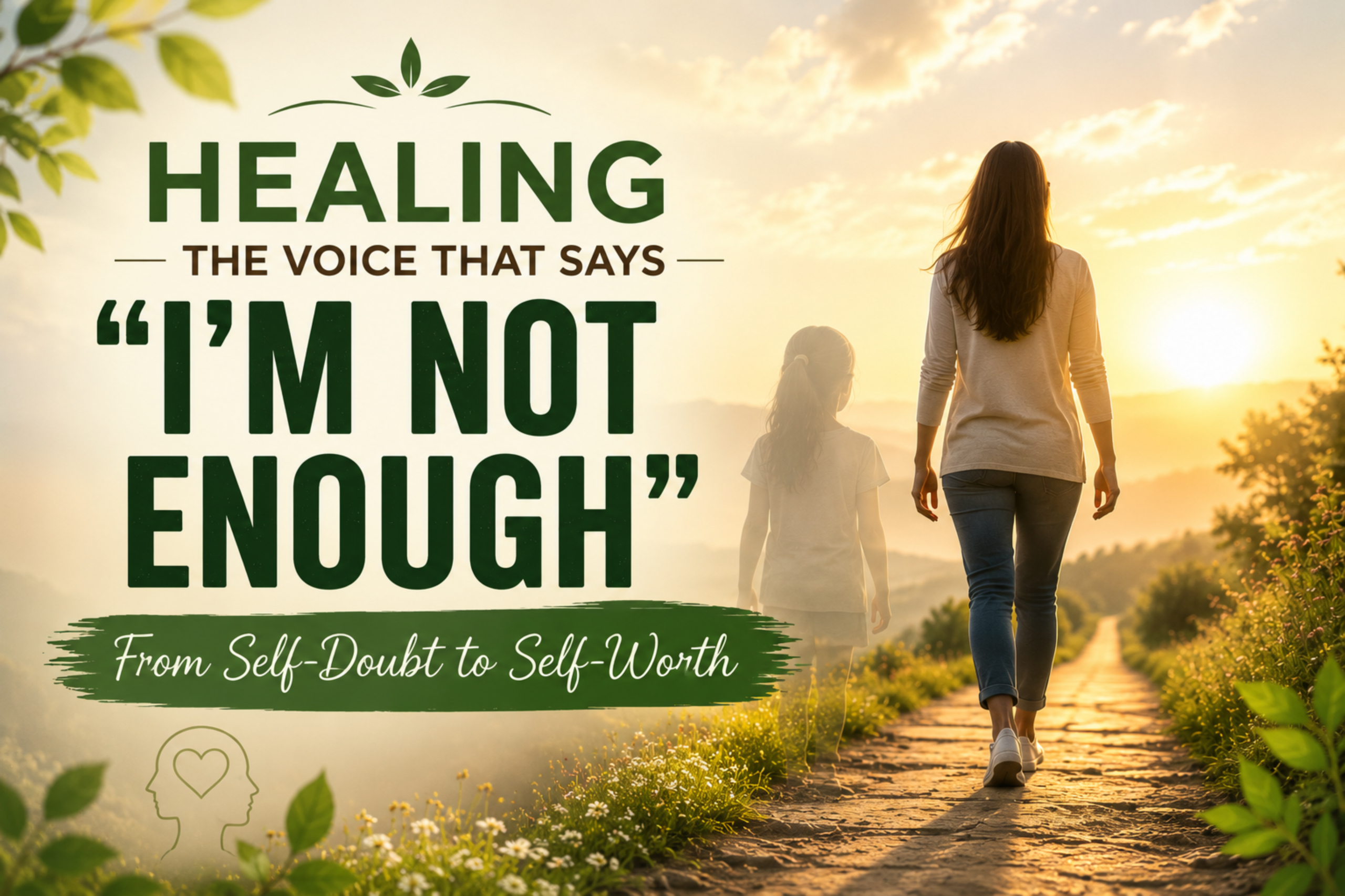
Many people live with a quiet ache they cannot easily explain. On the outside, they may seem capable, productive, and even successful. Inside, however, they are carrying a voice that keeps whispering, “You are not enough.” That voice can shape how a person sees themselves, how they relate to others, and how they handle mistakes, disappointment, and pressure.
For some, this struggle began early in life. A childhood filled with criticism, comparison, emotional distance, harsh expectations, or inconsistent care can leave deep marks. Over time, those experiences can become beliefs. A child may grow up thinking they must perform to be loved, stay small to be accepted, or hide their feelings to avoid rejection. By adulthood, those beliefs may feel so familiar that they sound like the truth.
But they are not the truth. They are wounds speaking.
Healthy self-worth begins when we start separating who we are from what we were made to believe about ourselves. It begins when we slow down long enough to notice the messages we carry, question the lies they contain, and replace them with something steadier and kinder. Healing self-worth does not mean pretending pain never happened. It means refusing to let pain have the final word.
Self-worth is not built by perfection. It is built by truth. It grows when a person learns to respect their own needs, honor their limits, speak to themselves with compassion, and stop treating their value as something that must be earned every day. It also grows when we allow ourselves to rest without shame, say no without apology, and make room for growth without self-hatred.
If you have spent years feeling as though you must prove your worth, this is your reminder: you are not behind, broken, or too late. You are learning how to come home to yourself.
What self-worth really is
Self-worth is the internal sense that your life has value. It is not the same as achievement, popularity, or constant confidence. Those things can rise and fall. Self-worth is deeper. It is the quiet understanding that you matter even when you are tired, uncertain, grieving, or still becoming.
When self-worth is healthy, a person can make mistakes without collapsing into shame. They can receive correction without feeling erased. They can rest without believing they are lazy. They can disagree with others without feeling guilty for having a voice. Healthy self-worth creates emotional steadiness because it is rooted in value, not performance.
How low self-worth often shows up
Low self-worth does not always look dramatic. Often, it shows up in small daily habits and internal patterns that go unnoticed for years. You may notice that you:
- Apologize too often.
- Feel uncomfortable receiving praise.
- Compare your progress to everyone else’s.
- Struggle to rest without guilt.
- Say yes when you want to say no.
- Fear being disliked, misunderstood, or left out.
- Assume other people’s needs matter more than your own.
- Talk to yourself in ways you would never speak to someone you love.
These patterns are not signs that you are weak. They are often signs that your heart has been carrying too much for too long.
Signs that self-worth is growing
Healthy self-worth also leaves traces. It may begin quietly, but it becomes noticeable over time. You may realize that you:
- Set boundaries with more confidence.
- Feel less shaken by criticism.
- Stop needing constant reassurance.
- Speak to yourself with more patience.
- Recover more quickly from disappointment.
- Choose relationships that feel safe and mutual.
- Recognize that rest is not a reward.
- Understand that your mistakes do not cancel your value.
These are not signs of perfection. They are signs of healing.
Rewriting the inner script
One of the most important parts of healing self-worth is learning to hear your inner voice differently. Not every thought that appears in the mind deserves your agreement. Some thoughts are old echoes. Some are borrowed from the past. Some are simply fear dressed up as fact.
When a painful thought rises, pause and ask:
- Where did I learn this?
- Is this actually true?
- What would I say to someone I care about if they believed this about themselves?
- What is a gentler, truer sentence I can choose instead?
This process may feel awkward at first. That is normal. New beliefs often feel unfamiliar before they feel natural. The goal is not to force positivity. The goal is to build honesty, compassion, and emotional safety from the inside out.
Small practices that strengthen self-worth
Healthy self-worth is not built in one emotional breakthrough. It is shaped through repeated choices. Small actions matter more than people often realize. You can strengthen self-worth by:
- Honoring your own limits.
- Keeping promises you make to yourself.
- Letting yourself rest before you burn out.
- Choosing honesty over self-abandonment.
- Spending less time with voices that diminish you.
- Noticing what you do well instead of only what needs fixing.
- Practicing self-kindness on ordinary days, not only difficult ones.
Every small choice tells your mind a new story: I matter. My needs matter. My peace matters.
A gentle reminder
Healing self-worth is not about becoming someone else. It is about remembering who you were before pain taught you to doubt yourself. It is about learning to live from truth instead of fear.
You are allowed to heal slowly.
You are allowed to take up space.
You are allowed to stop shrinking.
You are allowed to be treated with care.
You are allowed to believe that your life has value.
Your worth was never meant to be earned. It was meant to be known.
Written by:
Sr. Perpetua Vanessa Udechukwu, DDL
About the Author
Sr. Perpetua Vanessa Udechukwu is a psycho-spiritual therapist at Divine Love Psycho-Spiritual Counselling Centre, Emene, Enugu, Nigeria. She is dedicated to supporting psycho-spiritual well-being, emotional healing, spiritual growth, and inner transformation through compassionate professional psycho-spiritual care.